5 MIN READ
Having looked back at 2021, another rather odd and tumultuous COVID-19 impacted year, one event, in particular, warms my heart – a brief August get-away to sunny Barcelona- a wonderful way to end the summer and start a busy school year. Since coming home from the trip, the days have been filled with a full schedule at Copenhagen University deciphering sentences and grammar of Ancient Greek and lingering once again over immortal classics of Homer and Ovid. Recent social events taking place in Catalonia made me prick up my ears and go back to the seem to be remote summer memories of the time spent in Barcelona and its local language. In mid-December, a Spanish court mandated Spanish to be the language of 25 percent of subjects in Catalan schools where at present all classes are taught in Catalan. This made Catalan people react, and protesters flooded Barcelona streets opposing the new law. Memories of the suppressing power of general Francisco Franco over the Catalans and their language returned and the fear of language along with the whole education system being impacted and weakened became real again. This also made Catalan separatists bustle anew.
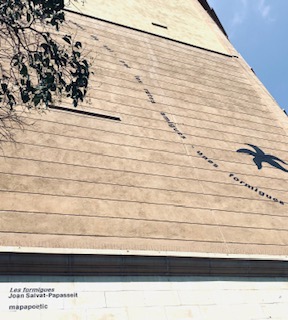
Catalan is an Indo-European, Italic, Romance, Italo-Western, Western, Gallo-Iberian, Ibero-Romance, East Iberian language. So is Spanish, only classified as West Iberian, Castilian. This explains the affinity of the two in sound and vocabulary. Around nine million speak Catalan, the majority of which reside in Spanish regions of Catalonia, Valencia, Balearic Islands, and minorities in Andorra and Southern France.
At first glance or sound of Catalan, one may think one is looking at and hearing Spanish. It is at least what one expects to see and hear within the territory of the Kingdom of Spain where Spanish is a principal language and therefore dominates all areas of public life in all of its regions. If looking closer, Catalan words seem different or often appear paired with Spanish. When listening carefully, gracias sounds different. Though a minor difference, still a difference. And for a person like me with a personal sensitive language background, the differences are understandable. It is not the first time I write about closely related languages that can seem almost the same to strangers. For the speakers of those tongues, however, it is often about the identity and pride to have something of one’s own.
My personal experience parallels it to the political and social events in Lithuania and the language sensitivity and policies concerning Russian in the 90s. Lithuanian and Russian are not related in the same way Catalan and Spanish are. It is, however, an analogy of a language of a potentate power being imposed on a minority that speaks maybe similar and yet its own local language. I cannot deny the fact that learning Russian as a young girl helped me years later obtain a degree in the Russian language and led to amper job possibilities, travels, exciting peoples, and enriching cultural experiences. Each time however when Lithuanian is compared to or even mixed with Russian my patriotic feelings and strong affection for my native tongue bubble up. It is known that children learn languages the easiest, and learning Spanish may bring wonderful opportunities for Catalan children in the future. However, the court’s ruling to enforce it on the children may provoke a certain aversion to it. Let’s see what the year 2022 will bring to Catalans and the rest of the wide world, hoping that languages and their diversity will play a valuable and peaceful role rather than the other way around.
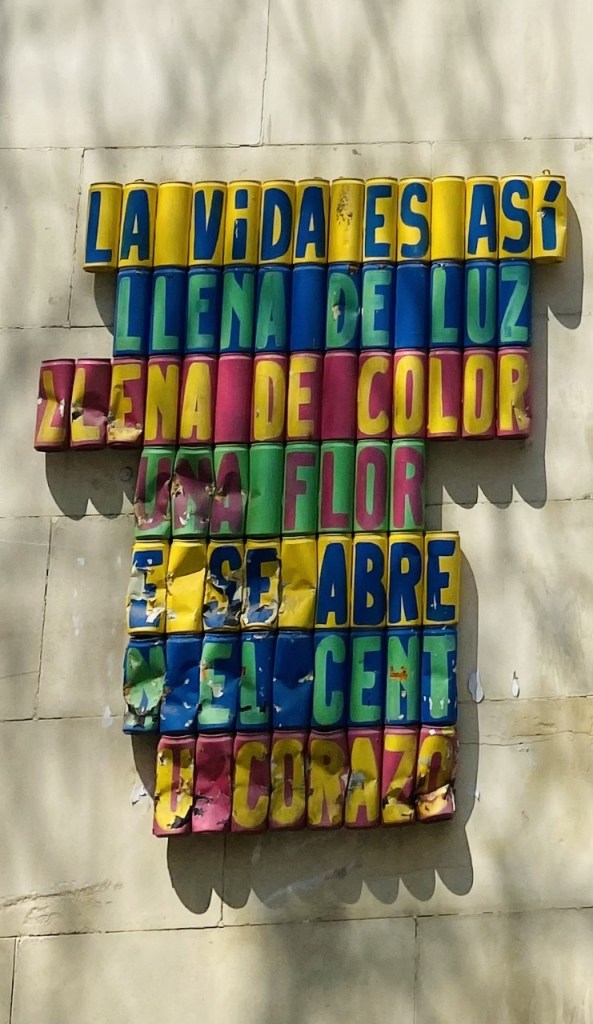
Sources: Ethnologue, Euronews.com (Thousands of Catalans protest against decision for more Spanish in schools/ 18.12.2021)
 Ventral Striatum